
Okay, so check this out—I didn’t mean to switch wallets. Really. I was stubborn. But something felt off about my setup: too many prompts, too many accidental approvals, and the constant fear of a bad site stealing a token. Wow. Rabby changed that for me in ways that are small but meaningful.
I’m biased, sure. I live in the browser extension world—testing wallets, juggling networks, and breaking somethin’ occasionally to learn how to fix it. My instinct said try one more wallet before giving up on the multi-chain dream. Initially I thought it would be just another MetaMask clone, but then I realized Rabby focuses on two things: safer UX for approvals, and clearer multi-chain management. Actually, wait—let me rephrase that: it’s less about flashy extras and more about reducing the dumb mistakes users make every day.
Here’s the thing. When you’re dealing with Ethereum and many EVM chains, complexity scales fast. On one hand, you want convenience—on the other, every convenience is a potential risk. Rabby balances those two with a few features that, to me, make it worth trying. I’m not saying it’s perfect. Nothing is. But for regular DeFi users who use lots of networks, it’s a compelling option.
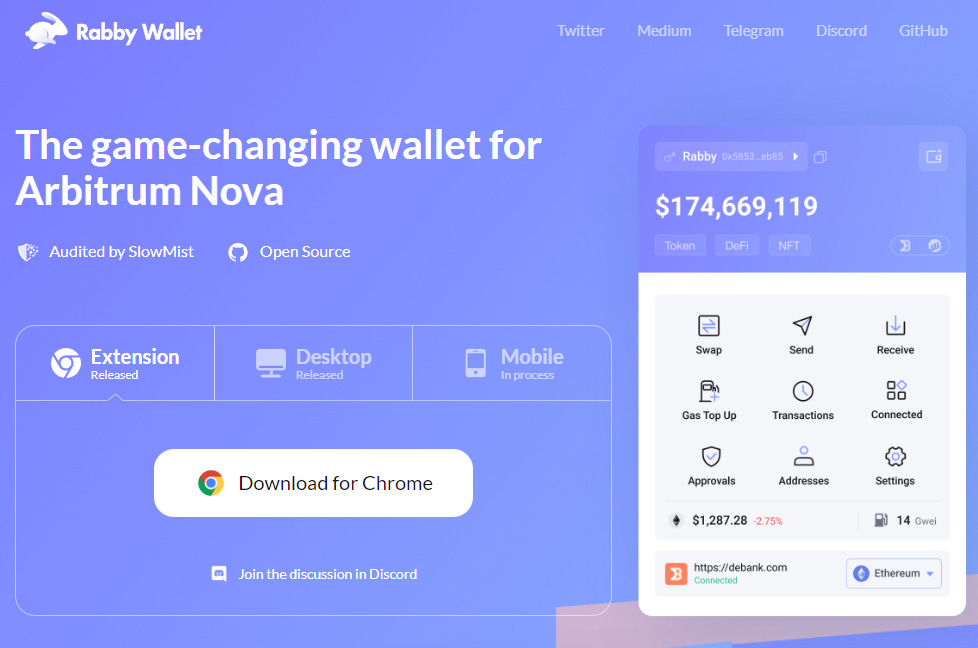
What Rabby gets right (and why it matters)
First off, the UI is clean without being sterile. Approvals are more granular. That sounds small. But it’s huge. Instead of blindly approving “unlimited” token allowances, Rabby nudges you toward safer choices and makes the consequences visible. Seriously? Yes. When you see the exact allowance scope and the originating contract, you pause. And pausing prevents a lot of stupid mistakes.
Second: multi-chain handling. Rabby treats chains as first-class citizens. You can add custom RPCs and switch networks without the weirdness you get from some wallets that silently send you to the wrong chain. On top of that, transaction simulation and gas estimation feel more transparent than what I was used to. My first impression was “this is just nicer”, then I saw fewer failed transactions—and that saved money.
Third: hardware wallet integration. If you use a Ledger or similar, Rabby plays nicely. I connect my Ledger for big moves and keep a hotter key for low-value ops. On one hand that feels like extra work; on the other, it’s the kind of layered defense that stops most theft vectors. On balance? Worth the small friction.
Lastly, the dev experience. If you tinker with dApps or use multiple accounts for testing, Rabby’s account management is straightforward. You can import multiple seed phrases or create separate identities without everything collapsing into one giant address soup. That organizational clarity is underrated.
How I actually use it day-to-day
Okay, a quick walkthrough of my workflow. Not a step-by-step guide—just what I do.
I keep the extension pinned and set up two primary accounts: my Ledger-backed main, and a hot wallet for low-risk interactions. Most approvals go to the hot wallet. For anything involving value over a few hundred dollars, I route the transaction to the Ledger. This split reduces cognitive load and gives me an easy rollback when somethin’ smells fishy.
I also use Rabby’s domain-based permissions to limit approvals. When a dApp asks for token allowances, I set them to minimal amounts whenever possible. And I check the contract address before approving. Sometimes that takes 10 extra seconds. Sometimes it stops a scam. On balance, those 10 seconds are worth far more than the few tokens I might save by speeding through approvals.
Oh, and gas controls: I set custom gas when I need priority, but more often I trust Rabby’s suggestions and double-check the nonce sequence when complex interactions happen. That bit of attention has saved me from stuck transactions more than once.
Security tips that matter (practical, non-fussy)
I get asked a lot: “What’s the single biggest mistake users make?” Easy—clicking approve without context. Rabby reduces that risk by default, but you still have to be skeptical.
Tips:
- Keep high-value assets on a hardware wallet and use the extension as a bridge, not the vault.
- Use minimal allowances; approve only what the dApp needs for that action.
- Verify contract source and domain. If the site looks off, close the tab and revisit from a known bookmark.
- Back up your seed phrase offline, and don’t store it in a browser note or cloud drive.
- Review connected sites in the extension periodically—revoke ones you no longer use.
I’m not 100% sure there’s a single perfect approach—there rarely is—but combining these practices makes you far less likely to lose funds to common attacks.
When Rabby isn’t the right fit
It’s not for everyone. If you want the absolute simplest onboarding for brand-new users, or if your workflow depends on a single integrated ecosystem that only a specific wallet supports, Rabby might feel like overkill. Also, if you rely entirely on built-in custodial features (like fiat on-ramp inside the wallet), check whether Rabby integrates with your preferred providers. For some users, a custodial mobile wallet still makes sense.
That said, if you’re comfortable with browser extensions and want stronger controls over approvals and a smoother multi-chain experience, Rabby is worth a try. You can grab it here: rabby
FAQ
Is Rabby compatible with MetaMask accounts?
Yes. You can import MetaMask seeds or create new accounts. Many users migrate incrementally—export one account, test, then move others. It helps to keep a backup before you start poking around.
Can I use a hardware wallet with Rabby?
Absolutely. Ledger is supported and it works well for signing high-value transactions. For best security, use the hardware wallet for large transfers and Rabby-managed hot wallets for everyday interactions.
Does Rabby support automatic transaction simulation?
Rabby includes features to preview and analyze transactions, which reduces failed transactions and unexpected token approvals. It’s not magic, but it gives you more context before you sign.